The pressure tank is one of the smallest-looking parts of a booster system and one of the most important. Get it right and your pumps last longer and run smoother; skip it and they hammer themselves to an early failure.
What a pressure tank actually does
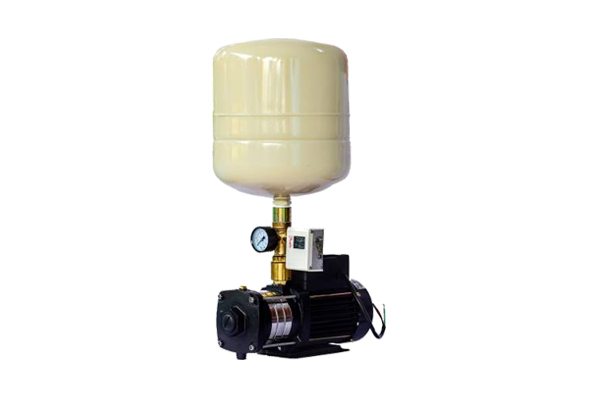
A diaphragm pressure (expansion) tank stores a small volume of water under pressure behind a flexible membrane charged with air. That cushion does three things:
- Absorbs small demand — a single tap can be served from the tank without starting a pump at all.
- Holds steady pressure — it smooths the pressure ripple between pump cycles.
- Reduces pump starts — fewer starts means far less wear on motors, bearings and seals.
Why starts matter: every motor start is an electrical and mechanical stress event. Cutting the number of starts is one of the cheapest ways to extend pump and motor life.
Choosing a size
Bigger tanks store more energy and reduce cycling further, but cost more and take space. The right size depends on your flow, the pump's acceptable starts-per-hour and available room. Our ladder covers the common range:
- 24 – 35 L: small residential and light-duty boosters.
- 60 – 100 L: mid-size societies and commercial systems.
- 150 – 200 L: larger installations wanting minimal cycling.
Don't forget the connection kit
A tank is only as good as its installation. We pair tanks with the right accessories:
- SS flexible hose for a clean, vibration-tolerant tank connection.
- NRV (brass or SS) and a five-way connector — or the combined NRV + five-way SS unit.
- Pressure gauge and transmitter so the panel can read system pressure.
Key takeaways
- A pressure tank cushions demand and holds steady pressure
- Fewer pump starts = longer motor, bearing and seal life
- Sizes 24–200 L match light-duty up to large installations
- Pair with SS hose, NRV and five-way connector for a clean install
- Tanks are imported directly and available standalone or B2B