An under-sized booster leaves top-floor taps dribbling; an over-sized one wastes energy and money. Sizing a HYPN pressure boosting system comes down to three questions: how much water at once, how much pressure, and how to stage the pumps.
Step 1 — Estimate peak flow
Peak flow is not the sum of every tap; it's the realistic simultaneous demand. For residential buildings this is estimated from the number of flats and fixtures using a simultaneity (diversity) factor — not everyone opens a tap at the same second.
- List dwelling units and typical fixtures per unit.
- Apply a diversity factor so you size for realistic peak, not theoretical maximum.
- Express the result in m³/h — our range runs up to 20 m³/h per system.
Step 2 — Work out the required head
Head (pressure) has to cover three things:
- Static height — the vertical distance from the pump to the highest, farthest outlet.
- Friction losses — through pipes, bends, valves and the header.
- Residual pressure — the minimum pressure you want at the tap or fixture.
Step 3 — Choose the number of pumps
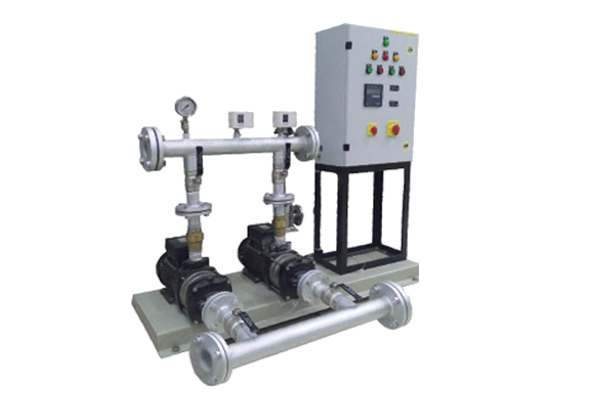
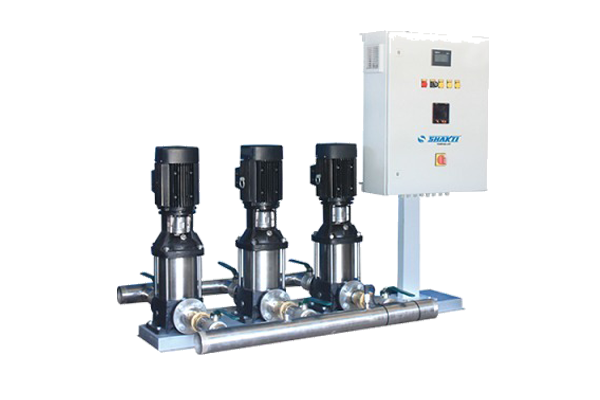
HYPN systems use multiple pumps that stage up and down with demand (1P–4P). More pumps means smoother control and built-in redundancy:
- Duty/standby — one pump runs, another waits, so a failure never stops supply.
- Staged operation — pumps switch on only as demand rises, saving energy at low flow.
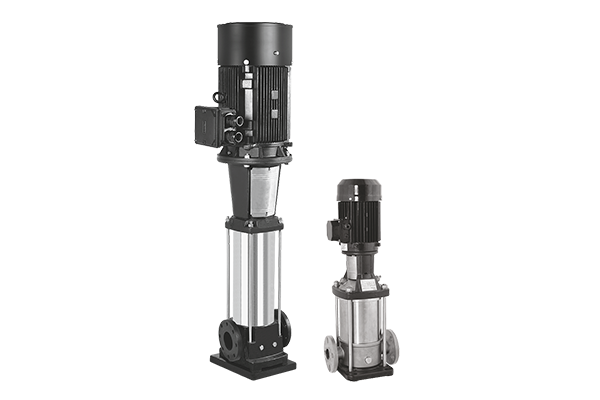
- Vertical vs horizontal — pick VM for a compact footprint or HM where headroom is limited.
Step 4 — Size the pressure tank
The pressure (expansion) tank absorbs small demand changes and stops the pumps from cycling on every tap. Larger tanks mean fewer starts and longer pump life. Our range spans 24, 35, 60, 100, 150 and 200 L, matched to system size.
Key takeaways
- Size for realistic simultaneous demand, not every fixture at once
- Head = static lift + friction + residual pressure, with margin
- Use multiple pumps for staging and duty/standby redundancy
- Add a correctly-sized pressure tank to cut pump cycling
- Vertical (VM) for compact plant rooms, horizontal (HM) for low headroom
Every project is different, so treat this as a framework rather than a formula. Share your building's details and we'll size and quote a configuration that fits.